A timber pest inspection examines accessible parts of a property for evidence of termites, wood borers and fungal decay, as well as conditions that can make future attack more likely. For Melbourne buyers, it is commonly completed alongside a pre-purchase building inspection so structural and timber-pest findings can be considered together.
What does a timber pest inspection cover?
The inspector visually examines accessible timber and surrounding conditions inside and outside the building. The scope generally includes the interior, roof space, subfloor, exterior, outbuildings and nearby site features where safe access is available.
- Visible evidence of active or previous termite activity.
- Termite damage, mud leads, shelter tubes and suspicious timber.
- Evidence of wood-boring insects.
- Fungal decay and moisture-related timber deterioration.
- Conditions conducive to timber pests, including leaks, poor drainage and inadequate ventilation.
- Obstructions and inaccessible areas that limit inspection.
The inspection is visual and non-destructive unless a different scope is agreed. Finished walls, flooring, stored goods and insulation can conceal activity, so no inspection can guarantee that hidden pests are absent.
Where inspectors look for termite risk
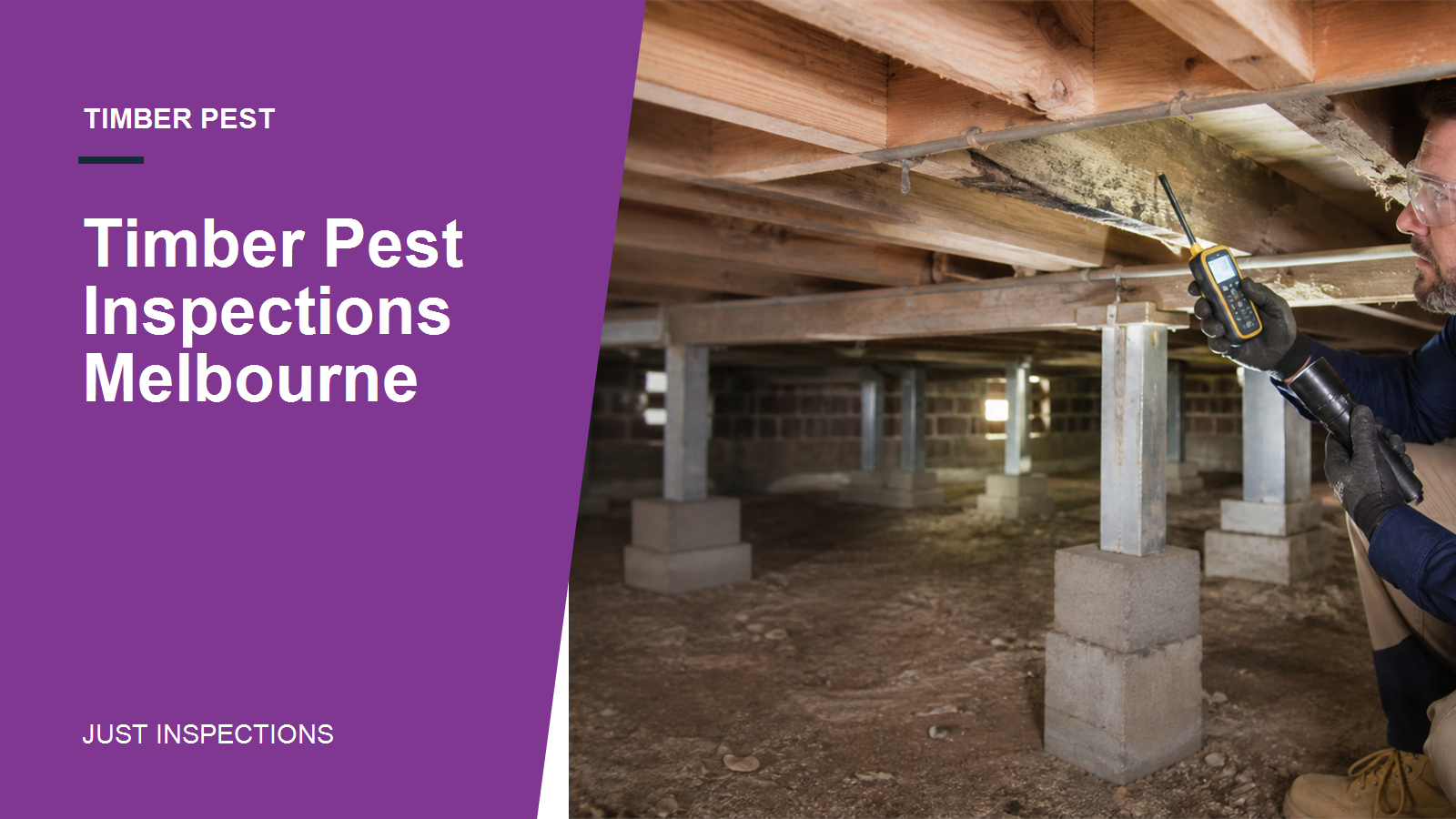
Termites need food, moisture and a path into the building. Inspectors pay particular attention to subfloors, slab edges, service penetrations, retaining walls, garden beds, timber stored against the house and areas where soil or paving obscures the inspection zone.
Inside, moisture staining, damaged skirtings, hollow-sounding timber and unexplained surface changes may require closer assessment. In roof spaces, the inspector reviews accessible framing and entry points while also considering leaks or ventilation problems that contribute to deterioration.
What tools may be used?
Depending on the property and agreed scope, an inspector may use a moisture meter, sounding tool, probe, bright light or thermal imaging as an aid. These tools support professional judgement; they do not see through every material or replace physical access.
Active termites versus conducive conditions
A report may find no visible active termites but still identify high-risk conditions. Examples include persistent moisture, leaking plumbing, timber-to-soil contact, blocked ventilation or areas that cannot be inspected. These findings matter because they affect the likelihood of concealed or future activity.
If active termites or significant damage are suspected, the report may recommend assessment by a licensed pest-management professional and, where structural timber is affected, an engineer or appropriately qualified building professional.
How to prepare for the inspection
- Arrange access to the roof space, subfloor, garage and outbuildings.
- Move stored goods away from walls where practical.
- Provide information about previous termite treatment or damage.
- Do not conceal or disturb suspected activity before the inspector attends.
- Allow enough time to review the report before contractual deadlines.
Should building and timber pest inspections be combined?
Combining the services gives the buyer a broader view of the property. Moisture, drainage, cracking and access issues can be relevant to both building condition and timber-pest risk. A coordinated report also makes it easier to prioritise further investigations.
Just Inspections provides independent building and pest inspections across Melbourne, with clear photographic findings and practical next steps for property buyers.
Frequently asked questions
Is a timber pest inspection the same as pest control?
No. An inspection reports accessible evidence and risk conditions. Treatment and ongoing management should be performed by an appropriately licensed pest-management professional.
How often should a property be inspected?
Inspection frequency depends on the building, location, termite pressure and previous recommendations. Follow the interval stated in the report and advice from a licensed pest professional.
Buying in Melbourne? Request a fixed quote for a combined building and timber pest inspection.