
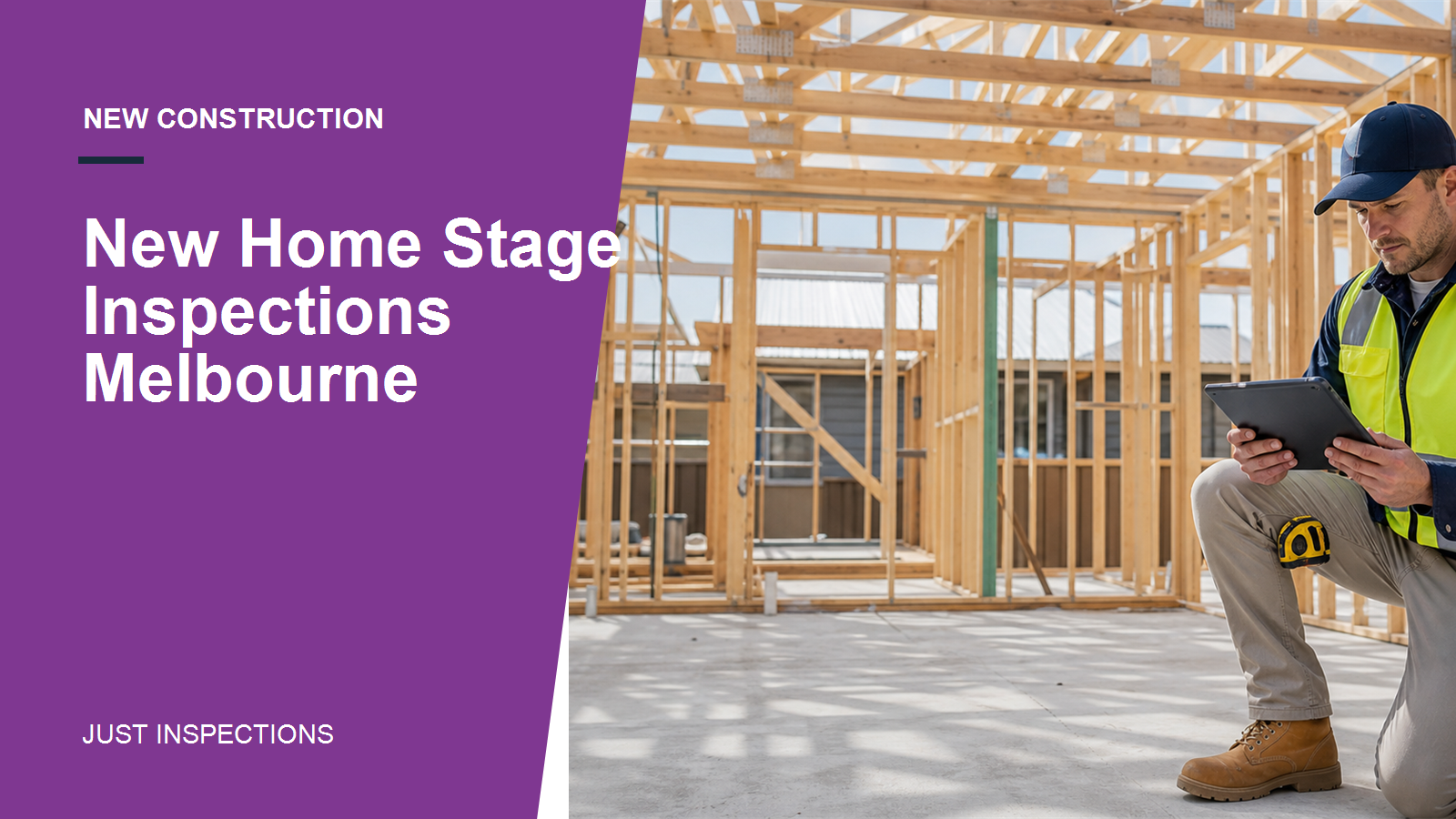
New home stage inspections can reveal defects because a new home can look finished while still hiding defects that become expensive once the next trade covers them. New home stage inspections give the owner an independent record of workmanship at the points when framing, waterproofing, services and finishes can still be properly checked.
This guide explains the common inspection stages used for Victorian residential builds, what an independent inspector looks for and how to arrange inspections without unnecessarily delaying construction.
What is a new home stage inspection?
A stage inspection is an independent quality check completed at a defined point in construction. It is separate from the builder’s supervision, the building surveyor’s mandatory inspections and any checks performed by individual trades. Its purpose is to identify visible defects, incomplete work and departures from the approved documents while rectification is still practical.
The inspector records accessible conditions on the day and issues a written report with photographs. The owner can then send the relevant items to the builder for review before the project moves to the next stage.
The main inspection stages
1. Base or slab stage
The base inspection is generally arranged after reinforcement, penetrations and formwork are prepared but before concrete is poured. Depending on the build, the inspector may review dimensions, set-downs, reinforcement placement, service penetrations, vapour barriers and other visible details against the available drawings.
Timing matters. Once concrete is placed, many of these elements can no longer be inspected visually.
2. Frame stage
The frame inspection occurs after the structural frame is erected and before plasterboard or internal linings conceal it. Typical checks include wall alignment, bracing, tie-downs, lintels, roof framing, openings, connections and visible damage to structural members.
The inspector also looks for items that may affect later trades, such as framing that is out of plumb, missing support, poorly located penetrations or incomplete rectification noted during earlier work.
3. Lock-up or pre-lining stage
At lock-up, the roof, external windows and doors are usually installed and the building can be secured. A pre-lining inspection may also be scheduled before internal wall linings are fixed. This provides an opportunity to examine accessible wall cavities, insulation preparation, flashing, external cladding interfaces and service penetrations.
Waterproofing should only be assessed when the relevant membrane is visible and before it is covered by tiles or finishes. The correct booking point depends on the builder’s sequence, so owners should confirm the inspection window early.
4. Fixing stage
The fixing stage covers internal elements such as plasterboard, doors, cabinetry, skirtings, architraves and other fitted components. The inspector checks visible workmanship, alignment, damage, incomplete installation and consistency with the approved selections where those documents are provided.
5. Practical completion or handover
A practical completion inspection is completed when the builder considers the home substantially complete and ready for handover. It is commonly the broadest inspection because most surfaces, fixtures and rooms are accessible.
The report may record incomplete work, visible defects, operation of accessible fixtures, moisture indicators, finish quality and items requiring attention before final acceptance. It is not a substitute for specialist electrical, plumbing, engineering or surveying certification.
When should inspections be booked?
Ask the builder for an indicative construction program and the notice they can provide before each stage is covered. Many inspection windows are short. Booking provisionally and confirming the date when the site is ready usually works better than waiting until the last moment.
- Provide the inspector with approved plans, engineering details and relevant variations.
- Confirm safe site access with the builder or site supervisor.
- Do not attend the site without permission.
- Allow time for the report to be reviewed before the next stage conceals the work.
- Send questions and rectification requests to the builder in writing.
What a stage inspection does not replace
Independent quality inspections complement—but do not replace—the builder’s contractual obligations, mandatory inspections by the relevant building surveyor, trade compliance certificates or specialist engineering advice. The scope is generally limited to areas that are safely and reasonably accessible at the time.
An inspector also cannot guarantee that every concealed defect will be identified. The value of staged inspections is that they create several opportunities to observe the build before important elements disappear behind concrete, cladding, insulation and plasterboard.
Are stage inspections worth it?
For many owners, the main benefit is early information. A framing issue is usually easier to discuss before linings are installed, and a waterproofing concern is easier to assess before tiling. Independent reports also provide a dated record that helps everyone understand what was visible at each stage.
Just Inspections provides new construction quality assurance inspections across Melbourne, Geelong and regional Victoria. We can help plan suitable inspection stages for your build and provide clear photographic reports for discussion with your builder.
Frequently asked questions
How many stage inspections do I need?
The appropriate number depends on the contract, building system, project risk and which stages have not yet been covered. A typical program may include base, frame, pre-lining or waterproofing, fixing and practical completion, but the scope should be tailored to the build.
Can my builder refuse access?
Site access is controlled by the builder while construction is underway. Owners should review their contract and arrange attendance through the site supervisor. Do not enter an active site without permission.
What happens after defects are reported?
The owner normally provides the report to the builder and asks for a written response. The builder should be given a reasonable opportunity to inspect and address valid items. More serious or disputed issues may require specialist advice.
Planning a new build? Request a fixed quote for independent stage inspections before work is covered.